
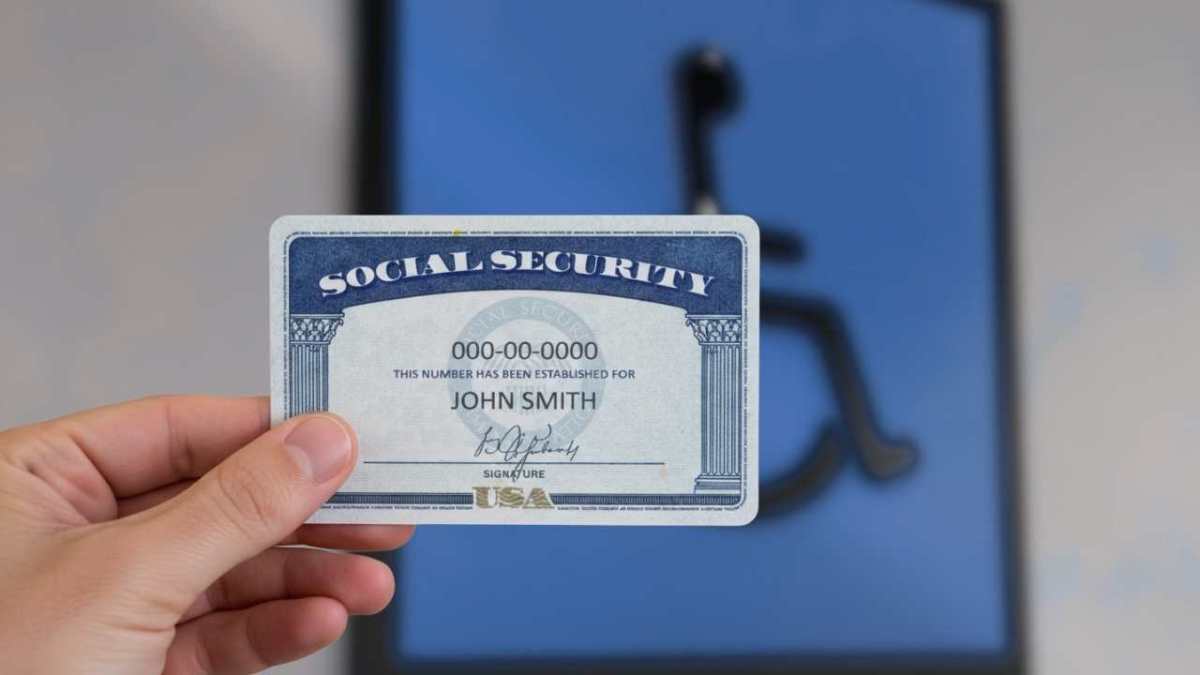
Warnings about a possible Social Security benefit cut in about six years are back in the headlines, and many people on disability are asking whether their checks are at risk too. According to the latest report from the Social Security Board of Trustees, the answer for now is no: the fund that pays Social Security Disability Insurance (SSDI) is in far better shape than the one that pays retirees.
The distinction matters for the roughly 7 million disabled workers who depend on SSDI. Below we explain what the Trustees projected, why the two funds are different and what could still change. If you are waiting on a claim, you can also check the latest figures on the disability backlog.
What did the Trustees report say?
Social Security is financed through two separate trust funds: the Old-Age and Survivors Insurance (OASI) fund, which pays retirement and survivor benefits, and the Disability Insurance (DI) fund, which pays SSDI.
In its 2026 report, released on June 9, the Board of Trustees projected that:
- The OASI fund’s reserves will be depleted in the fourth quarter of 2032. At that point, incoming revenue would cover about 78% of scheduled benefits.
- The DI fund’s reserves will remain positive throughout the entire 75-year projection period.
- If the two funds were combined, reserves would last until 2034, with 83% of benefits payable after that.
In other words, the “six years” figure that appears in many headlines refers to the retirement and survivors fund, not to disability benefits.
Why is the disability fund healthier?
The DI fund has benefited from disability applications and awards running well below the levels seen in the early 2010s, combined with continued payroll tax revenue from workers. Fewer new beneficiaries entering the program means less pressure on reserves.
The retirement fund faces the opposite trend. The number of retirees keeps growing as baby boomers age, while the number of workers paying in per beneficiary has fallen. The Trustees also project that the program’s total cost will exceed its total income every year from 2026 onward.
How much will SSDI beneficiaries get in 2027?
Disability checks will rise with the 3.6% cost-of-living adjustment (COLA) starting with payments in January 2027. According to SSA estimates, the average disabled worker’s benefit will increase from $1,642 to $1,701 a month, while a disabled worker with a spouse and children will see the average rise from $2,970 to $3,077.
Other limits also change. The substantial gainful activity threshold, the amount you can earn without losing eligibility, rises to $1,770 a month for non-blind beneficiaries. Here is our full breakdown of the 2027 SSDI figures.
Is there any risk for SSDI recipients?
There are two caveats worth knowing. First, SSDI benefits do not stay in the DI fund forever. When a beneficiary reaches full retirement age, the SSA automatically converts the disability benefit into a retirement benefit, which is paid from the OASI fund. The amount stays the same, but the money then comes from the fund facing the 2032 shortfall. We explain what happens to SSDI at full retirement age.
Second, Congress can change how payroll taxes are divided between the two funds, as it did in 2015 to shore up the DI fund. Any future reform could involve shifting money in the other direction or combining the funds.
What can you do now?
Nothing changes for current SSDI payments, which continue to arrive on the usual schedule, which for most beneficiaries is a Wednesday based on their birthday. To check your benefit amount and review your COLA notice when it is posted in late November, sign in to your my Social Security account. You can read the full report on the SSA’s Trustees Report page.
