
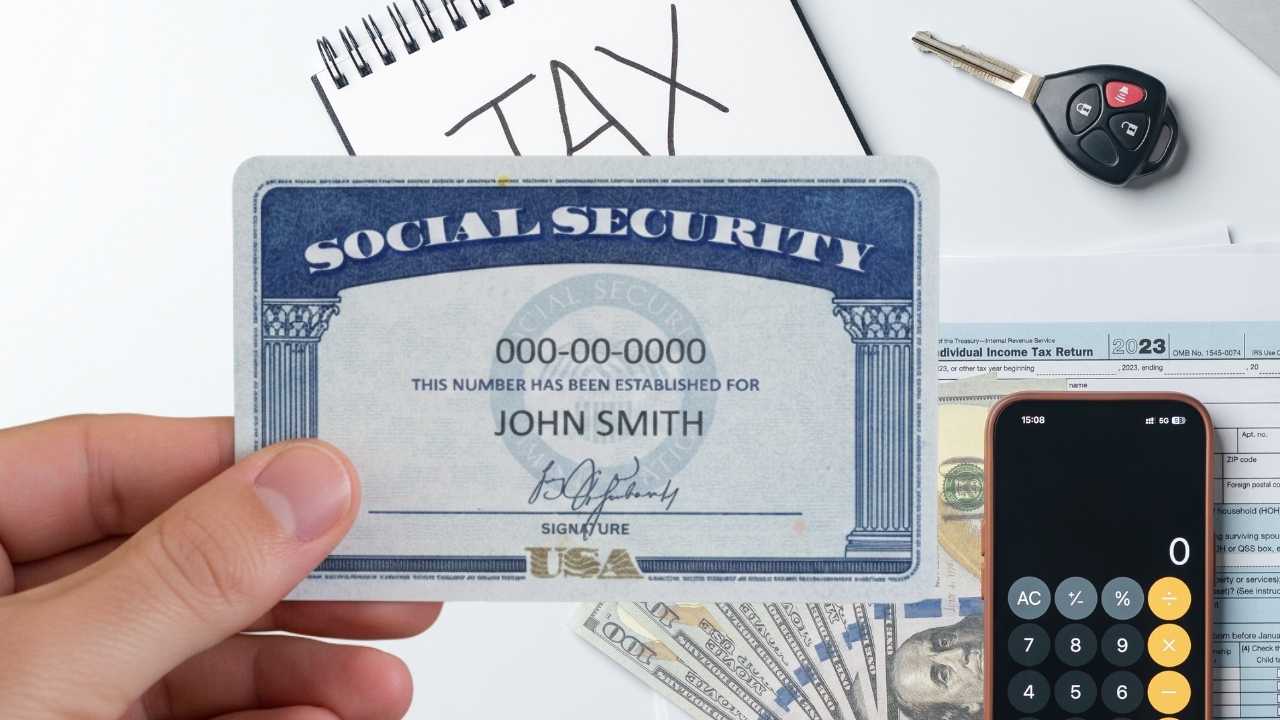
Would you pay less federal income tax in retirement next year? The Internal Revenue Service (IRS) announced new tax brackets and standard deductions for 2027 on Thursday, November 5, and people age 65 or older get more than one break.
The new figures apply to tax year 2027, so you’ll use them on the return you file in 2028. We explain how much retirees can deduct, who could lose part of it and why the higher numbers don’t change one key Social Security rule. If you still work, also check how the $192,300 wage cap for 2027 affects your paycheck.
How big is the 2027 standard deduction?
The base standard deduction rises to $16,600 for single filers, up from $16,100 in 2026. Married couples filing jointly can claim $33,200, up from $32,200. Heads of household get $24,925.
Taxpayers age 65 or older can add an extra amount on top. For 2027, that’s $2,100 if you’re unmarried and $1,700 per qualifying spouse if you’re married. Blind taxpayers can claim it as well.
Where does the $48,600 figure come from?
There’s a third layer. The tax law signed in July 2025 created a separate senior deduction of $6,000 per eligible person, which runs from 2025 through 2028. Added together, the numbers look like this:
- Single, 65 or older: $16,600 + $2,100 + $6,000 = $24,700.
- Married, both 65 or older: $33,200 + $3,400 + $12,000 = $48,600.
These are the maximums. The senior deduction isn’t guaranteed for everyone, so don’t assume you’ll get the full figure.
Who could lose the $6,000 senior deduction?
According to the IRS, the deduction phases out when modified adjusted gross income passes $75,000, or $150,000 for joint filers. You must also meet these requirements:
- Turn 65 on or before the last day of the tax year.
- Include the Social Security number of each qualifying person on the return.
- File jointly if you’re married.
One detail helps many retirees: you can claim this deduction whether you itemize or take the standard deduction.
What are the new tax brackets?
The rates themselves stay at 10% to 37%, but more income fits into the lower bands. These are the thresholds most retirees will care about for 2027:
- 10%: taxable income up to $12,800 ($25,600 for joint filers).
- 12%: over $12,800 ($25,600).
- 22%: over $52,025 ($104,050).
- 24%: over $109,125 ($218,250).
Here’s a simple example. A single 67-year-old with $40,000 in adjusted gross income who qualifies for all three deductions would have $15,300 in taxable income. That means 10% on the first $12,800 and 12% on the remaining $2,500, for a federal income tax bill of about $1,580.
Does this change the tax on Social Security benefits?
No. The bracket changes don’t touch the income test for Social Security. According to the Social Security Administration (SSA), you pay federal income tax on your benefits if your combined income tops $25,000 filing individually or $32,000 filing jointly. Combined income here means half of your benefit plus your other income.
That matters because the 3.6% cost-of-living raise for 2027 increases your benefit while those limits stay put. To see your new amount, check your my Social Security account once your notice is available.
What can you do now?
If you expect to owe tax on your benefits, you can avoid a large bill at filing time. The SSA lets you withhold 7%, 10%, 12% or 22% of your monthly payment, and you can start, stop or change that online or by calling 1-800-772-1213.
