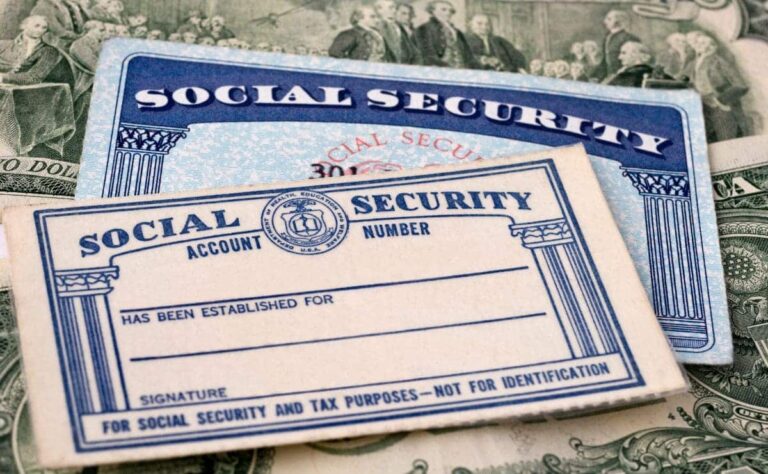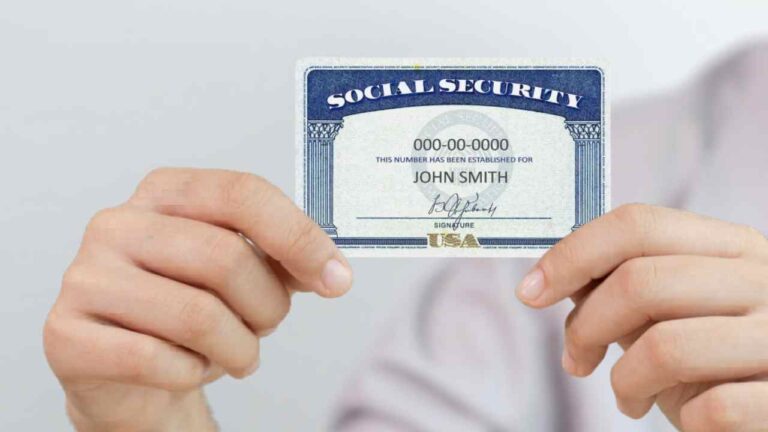

Retiring at 62 is still the most popular choice for many Americans who want to stop working as soon as possible. It is the earliest age at which Social Security pays a retirement benefit, but getting there is not automatic. The Social Security Administration (SSA) sets a series of requirements that you must meet first, and the amount you receive will be lower than if you wait.
These are the conditions and the official figures for 2026 that anyone thinking of claiming at 62 needs to know before filling out the application.
Requirement 1: 40 work credits
The first condition has nothing to do with age. To qualify for a retirement benefit you need at least 40 Social Security credits, which is roughly ten years of work in jobs where you paid Social Security taxes.
Credits are earned according to your covered earnings, and you can earn a maximum of four per year. In 2026, you earn one credit for every $1,890 in wages or self-employment income, so you need $7,560 during the year to get the full four, as explained on the SSA’s official credits page. The agency makes an important clarification: the number of credits only decides whether you are eligible, not how much you will receive. The amount depends on your lifetime earnings.
Requirement 2: being 62 for the entire month
The second requirement is age, with a nuance that many people overlook. The SSA requires you to be 62 for the entire month to be entitled. If your birthday is on the 15th, that month does not count, and your first eligible month is the next one. Only those born on the 1st or 2nd of the month meet the requirement in their birthday month.
In addition, benefits are paid the month after they are due, so the first deposit usually arrives one or two months after you turn 62. You can apply up to four months in advance through the SSA’s official retirement application.
The cost of claiming early: 30% less for life
For anyone born in 1960 or later, full retirement age is 67. Claiming five years earlier carries a permanent reduction. According to the SSA’s early retirement reduction table, at 62 you receive 70% of your full benefit, that is, 30% less.
The reduction is calculated month by month, so every month you wait counts. At 62 and one month, for example, the benefit rises to 70.4% of the full amount. The cut also affects spouses: a husband or wife who claims at 62 receives 32.5% of the worker’s full benefit, compared with 50% if they wait until full retirement age.
The maximum check at 62 in 2026: $2,969
The SSA itself publishes the ceiling for this year. A worker who earned the taxable maximum every year since age 22 and retires in 2026 would receive:
- $2,969 a month claiming at 62.
- $4,152 a month claiming at full retirement age.
- $5,181 a month claiming at 70.
These figures are the absolute maximum and very few retirees reach them. As a reference, the average benefit for all retired workers stood at $2,071 a month in January 2026, after the 2.8% cost-of-living adjustment (COLA). The calculation is based on your 35 highest-earning years, and if you worked fewer than 35, the missing years count as zero and lower the average.
If you keep working, part of the benefit may be withheld
Claiming at 62 does not mean you have to stop working completely, but there is a limit. In 2026, if you are under full retirement age for the whole year, the SSA withholds $1 for every $2 you earn above $24,480. That money is not lost forever: once you reach full retirement age, the agency recalculates your benefit to account for the months it withheld. We explain how this limit works in our guide to working while on Social Security in 2026.
What Social Security does not cover at 62: Medicare
One detail that weighs heavily on the decision is health insurance. Retiring at 62 gives you access to Social Security, but not to Medicare, which generally does not start until age 65. Anyone who leaves a job with employer coverage will need to find another health plan for those three years, an expense that can eat into a reduced monthly check.
Documents to have ready before applying
To avoid delays, it is advisable to gather the basic documents before starting the application: proof of age such as a birth certificate, your W-2 forms or self-employment tax returns for the previous year, and your bank account details for direct deposit. Checking your earnings record in your my Social Security account also lets you correct errors before they affect the amount.
Retiring at 62 is a legitimate option and, for some people, the right one because of health, work or family reasons. But it is a decision that cannot be easily undone, so it is worth comparing the numbers carefully. If you want to see how the check changes depending on the age you choose, we break it down in our article on claiming Social Security at 62, 67 or 70.